Building on Oxford Red Clay: Critical Site Prep for Long-Lasting Sheds and Barns
Oxford red clay is tough, sticky, and unforgiving. If you want a shed or pole barn that stays level and dry, site prep is everything. As your local team for custom shed building, Simpson Superior Structures LLC plans every base, drain, and anchor around our soil and storm patterns so your structure performs for years.
Why Red Clay in Calhoun County Demands Special Prep
Red clay holds water and swells, then shrinks and cracks when it dries. That movement pushes on footings and can make lighter structures drift out of level over time. Areas near the Choccolocco Creek basin also see slow drainage after heavy rain, which means the ground can stay soft longer than you expect.
On top of that, many Oxford backyards have a gentle but steady slope. Water follows the grade, cuts ruts, and carries fine clay with it. Without a planned base and controlled runoff, you invite racking, sticky doors, and uneven floors.
Site Evaluation: Slope, Water, and Access
Every great build starts with a walk-through. Our crew studies the slope from house to fence line, checks where roof and yard water flow, and notes soil firmness after recent rain. We also plan how materials and equipment will reach the pad without rutting the lawn or churning clay.
- Grade patterns: where surface water starts, speeds up, and exits the yard
- Drainage clues: soggy spots, algae lines, and sediment fans below downspouts
- Access and staging: gate width, low limbs, tight corners, and driveway angles
In neighborhoods like Lakeview and Coldwater, small elevation changes can send stormwater straight across a future shed pad. We design around that path so water never sits under your floor.
Building the Right Base for Sheds and Pole Barns
A stable foundation spreads weight and resists movement. On Oxford clay, we rely on layered, compacted mineral material that drains fast and locks together. For pole barn construction, we focus on undisturbed soils for posts, consistent hole depths, and backfill that will not hold water against wood or steel.
We size the base to the building footprint with an appropriate apron so edges do not erode. Thickness and material blend vary by structure size, intended use, and site slope. The goal is simple and proven: a flat, dense, well-draining platform that does not pump water up into your floor system.
Never set a shed directly on bare red clay. Clay captures moisture and softens with repeated rain, which leads to uneven settling and early floor problems.
Drainage Controls That Protect Your Investment
Drainage is the quiet hero of a long-lasting shed. Our plans combine surface shaping with subsurface options where needed. In the Choccolocco Creek watershed, routing stormwater cleanly past the structure stops wicking, rot risk, and freeze-thaw mischief during cold snaps.
- Swales and grading that nudge water around, not through, the pad
- Perimeter stone and, when appropriate, buried drain tile to move water away
- Gutters and downspout extensions that discharge beyond the shed zone
- Edge protection that prevents washouts on steeper backyards
When we build larger footprints or place sheds near low spots, we add outflow paths that stay clear even after leaf drop. Standing water under a shed means trouble, so we plan to keep the area dry after storms.
Anchoring and Load Paths on Sloped Sites
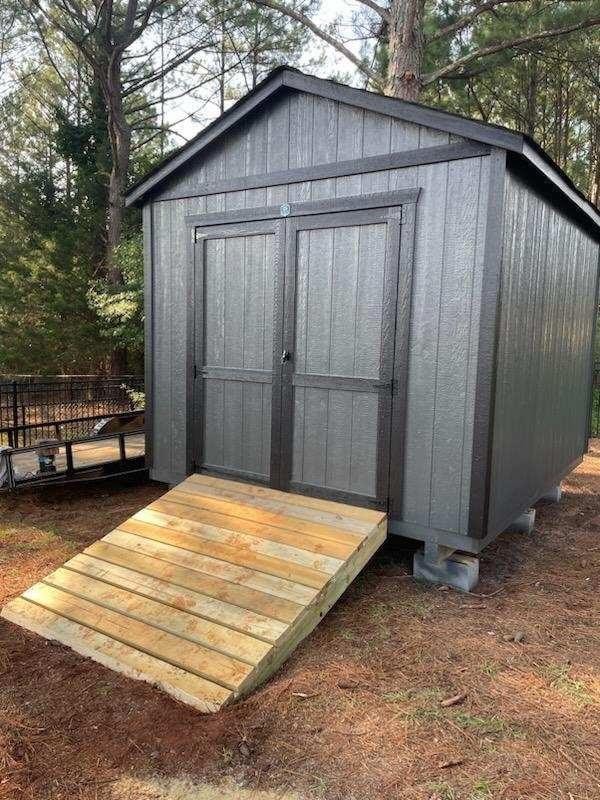
Wind, uplift, and side loads matter more on slopes. We match anchors and brackets to soil and exposure, then align them with the shed’s framing so loads travel straight into the base. On steeper driveways and lawns, safe access is equally important. We design and install heavy-duty ramps with the right slope, traction, and landing so lawn tractors, motorcycles, or tool carts roll up without drama.
Hardware choices vary by structure size and exposure. The aim is a unified system: base, anchors, framing, and roof all working together so the building feels solid on day one and still feels solid ten years later.
Moisture, Venting, and Floor Systems
Moisture control starts under the floor and continues through the walls and roof. A vented design helps the structure dry out after our pop-up summer storms. Proper clearances keep splash-back off siding, and smart placement of doors keeps wind-driven rain from barging in.
For shops, hobby barns, or tiny home style cabins, we talk about floor stiffness and surface choices so rolling loads do not telegraph bumps. Where homeowners plan to store heavy equipment, we size the base and floor assembly for that weight. Moisture management and floor stiffness are partners: both must be right on red clay.
Seasonal Timing in North Alabama
North Alabama brings wet spells in late winter and spring, scattered summer downpours, and fall storm systems. That rhythm affects when a yard is ready to support equipment and compaction. We schedule the base work when the ground condition will help it lock in, and we protect the prepared pad if rain arrives before the structure is placed.
When schedules are tight, we plan deliveries, staging, and build sequences to reduce tracking and protect your lawn. The result is a cleaner job and a longer-lasting foundation.
Solving Common Oxford Yard Challenges
Backyards in Oxford often combine a modest slope with shaded, slow-drying soil. That can hide problems until a big storm. Our crews are trained to spot the warning signs and build around them before they become headaches.
Here are patterns we solve all the time:
- Cross-slope water cutting across a planned shed location
- Narrow side yards that limit equipment access and staging
- Soft pockets over buried organic material that settle after a few months
- Driveway slopes that require a purpose-built ramp and landing
When a homeowner wants a flexible space like a workshop or a tiny home style studio, we shape the pad and drainage to match the heavier use. That makes doors swing true and floors stay quiet under load.
How Simpson Superior Structures LLC Prepares Sites for Sheds and Pole Barns
Simpson Superior Structures LLC brings a full site-first approach to every backyard. Our field team handles on-site leveling, slope management, and moisture control with a plan that fits your property, not a template. For storage sheds, hobby barns, and pole barns, we tailor bases, anchors, and ramps to your goals and our soil.
We also make it easy to compare options. If you are exploring a small garage-style shed, a farm-use pole barn, or a tiny home style outbuilding, we will walk you through the site impacts and what each design needs to last. You can browse our broader structure building options to get ideas, then talk with our team about the right fit for your yard.
For a deeper look at how we craft durable pads and drainage, start with our shed building company page and see how our process adapts to red clay and sloped lots in Oxford.
Access, Ramps, and Real-World Use
A great shed is easy to use. On sloped driveways and yards, heavy-duty ramps make all the difference. We align the ramp with the base and doorway so wheels track straight, and we plan a stable landing that sheds water rather than puddling at the threshold.
For mowers and UTVs, traction and width matter. We select surfaces that grip in wet conditions and give you confidence year-round. Good access protects the building because smooth entries reduce jolts that can loosen fasteners over time.
Preventing Foundation Settling in Oxford
Settling is not a single failure. It is a chain of small shifts that add up. On red clay, the chain often starts with water held where it should not be. From there, freeze-thaw and summer dry-down move the base. Our approach breaks that chain by keeping water moving, spreading loads, and locking the structure to the ground correctly.
We revisit anchor tension and door swing during the final check. If your site is near a drainage channel or low spot, we confirm that our outflow path is clear and stable. That last look pays off when the next big rain hits.
Who Benefits Most From a Site-First Plan
Most Oxford homeowners do. If you store woodworking tools, seasonal decorations, or lawn equipment, you want a flat, dry floor and doors that open cleanly in August humidity. If you run a small business from a backyard shop or plan a tiny home style studio, you want a base and structure that feel permanent even though it installs quickly.
If you expect frequent loading with trailers or hand trucks, tell us during planning. We will size the approach, landing, and ramp to match the heaviest item you plan to move. That prevents ruts and keeps the shed looking new.
Why Choose Simpson Superior Structures LLC for Custom Shed Building in Oxford
We live and build in North Alabama, so we plan for our rain patterns, clay soils, and rolling yards. Our crews are trained to read the site and build for it. That includes compacted bases that drain, anchors that resist local winds, and access that works for real life.
If you are just starting your research, a good overview lives on our home base. You can learn more about custom shed building in Oxford and see how our team supports you from the first site visit through final walkthrough.
Ready to Build on Red Clay the Right Way
Your shed or pole barn should feel rock solid from day one. Let Simpson Superior Structures LLC prep your site so the building lasts through Oxford storms and seasons. Talk with our team today at 256-452-4688 or review our process on the shed building company page. We are ready to help you plan a structure that stays level, dry, and useful for the long haul.
Let's Build Together! Contact Simpson Superior Structures LLC Today!